
When we think of school readiness, we tend to think of children writing their name, identifying letters and numbers, tying their shoes, and using a pencil. While these are all important skills, there is one that surpasses them all – social emotional skills.
Social emotional skills are an important set of tools for children to establish at a young age. These skills will help them regulate their emotions, solve problems, interact with their peers, and be ready to learn. When children are not regulated, they cannot learn. By helping children identify their emotions and using various strategies to help them self-regulate, we are putting them on the road to success.
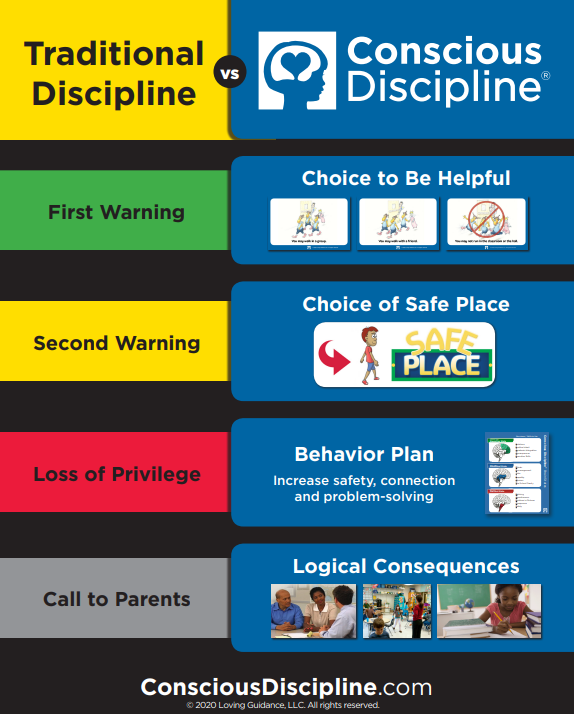
In the classrooms, we use Conscious Discipline to help teach these valuable skills. We assist the children in identifying their emotions and learning to handle them. We build a classroom community that focuses on problem solving, empathy, and connections. As we strengthen the community alongside our students, we are filling up their tool chests with valuable tools.
Here are some examples of simple strategies our teachers use that you can repeat at home:
- Practice labeling emotions. Use phrases such as “I can see that you are angry” to identify the emotion.
- Practice breathing techniques to begin to self-regulate. “Let’s take a deep breath together.”
- Limit choices to two – and make sure both are acceptable to you. “You can clean up the green ones or the blue ones.”
Ask your child or their teacher what skills they are learning each week. Try to practice those same skills at home. Building social emotional skills is an important part of your child’s learning journey.